Elements® Comprehensive Financial Planning for Dentists

The Elements Financial Planning System™, originally developed by Dentist Advisors, is a proactive treatment plan for your financial health. Our advisors use Elements to monitor your key financial indicators, benchmark your performance against other dentists, and optimize each moving part of your wealth strategy.


Book free Consultation

Explore the Elements®

To learn how the Elements® function, click on one of the four main questions answered by the table or select an individual block for further explanation.

How our advisors use Elements®

Organize

Elements takes hundreds of financial jobs to be done and simplifies them into 12 main categories which our team uses to make sure all the accounts, data, and documents related to your financial plan are accurate, up to date, and easily accessible.

Analyze

With a clear picture of your income, personal spending, practice profitability, savings, debt, insurance, assets, and so on, our advisors can turn your various financial inputs into quantifiable scores that provide an objective diagnosis of your financial health.

Decide

Your Elements scores will highlight gaps and opportunities in your plan, and give our advisors the ability prioritize adjustments that will help you:

  • Maintain the right mix of assets
  • Optimize your cash flow
  • Take the proper amount of risk
  • Build enough wealth for retirement

Act

A list of action items will be documented and used by our advisors to:

  • Explain your next steps
  • Delegate assignments to our internal team
  • Facilitate conversations with your other service professionals
  • Introduce you to our approved industry partners

How does your performance compare?

See how your performance compares to hundreds of other dentists. Take our Elements® benchmark survey to receive your free report.

Take Free Benchmark Survey

Elements® Related Resources

Explore educational content related to each Element in our periodic table of financial indicators

Inflation Worries, Declining Currency, and the Tooth Fairy – Episode 245

What does the amount the tooth fairy pays kids have in common with your portfolio? On this episode of the...

Is Your Advisor a Data Nerd or Just Taking Your Word? – Episode 238

There are many ways to deliver financial advice. So how can you know you’re getting advice that’s right for you? ...

The Stress Test: How Enduring Volatile Markets Leads to Success – Episode 237

Find out what it takes to keep your poise during turbulent times. Investors are tense, the public seems restless. Where...

What Dentists Want to Know — Listener Q&A #15 – Episode 235

How should you construct your portfolio to protect yourself for the future? On this episode of the Dentist Money™ Show,...

What Dentists Want to Know — Listener Q&A #14 – Episode 232

Why your financial advisor should do more than just put money in your investment accounts.   On this episode of...

What COVID Has Revealed About Investor Biases – Episode 231

Will an increased awareness about different types of risk affect your investment decisions?  On this Dentist Money™ Show, Reese and...

Can You Keep Your Cool When Things Ain’t Cool? – Episode 228

Humans have an innate desire to control their surroundings. Here’s what happens when we lose that control. On this episode...

How would you define risk?

Do you know the difference between the volatility of an investment portfolio and the risk of complete loss? In this...

How does diversification cushion risk?

You would never worry about the value of your house dropping to zero. So why would you look at stocks...

Why own stock instead of other assets?

All assets you invest in can grow in value. But equities, or investments in companies whose stock is traded in...

How are public markets and diversification related?

Putting too much concentration in one investment actually raises your risk significantly. In this video clip, Reese Harper and Ryan...
How do public markets work?

What can Seattle’s Pike Place Market teach you about investing? In this video clip, Reese Harper and Ryan Isaac talk...

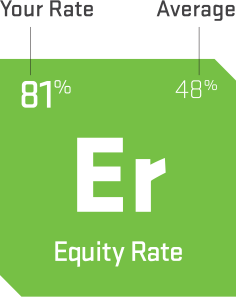
Er Equity Rate

Helps us determine whether the client will experience too much volatility risk for their personal level of spending and age.

Listen to our podcast episode about Equity Rate

Explore Equity Rate related articles

How We Determine Your Score

EQUITY INVESTMENTS

TOTAL INVESTMENTS

Pr Profitability Rate

Measures how much money the practice owner keeps as a percentage of collections. This serves as an important indicator of business efficiency.

Listen to our podcast episode about Profitability Rate

Explore Profitability Rate related articles

How We Determine Your Score

TOTAL PRACTICE-
RELATED INCOME

TOTAL COLLECTIONS

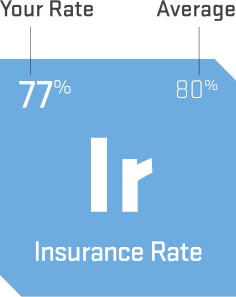
Ir Insurance Rate

Measures how much insurance a person has compared to how much they need based on annual spending and net worth. Coverage is evaluated for the following types of insurance: life, general disability, business overhead disability, buy-sell, key person, personal liability, and business liability.

Listen to our podcast episode about Insurance Rate

Explore Insurance Rate related articles

How We Determine Your Score

INSURANCE
COVERAGE HELD

INSURANCE
COVERAGE REQUIRED

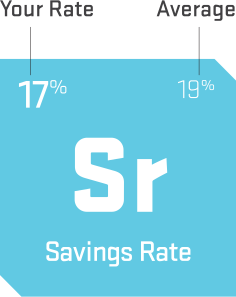
Sr Savings Rate

Indicates how much of a person’s income is being put away for future expenses, emergencies, and retirement.

Listen to our podcast episode about Savings Rate

Explore Savings Rate related articles

How We Determine Your Score

ANNUAL SAVINGS

TOTAL
PERSONAL INCOME

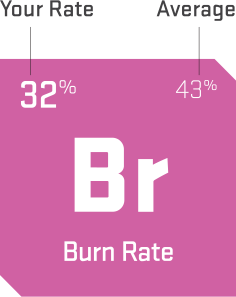
Br Burn Rate

Helps us understand a client’s spending patterns and retirement preparedness.

Listen to our podcast episode about Burn Rate

Explore Burn Rate related articles

How We Determine Your Score

ANNUAL PERSONAL
SPENDING

TOTAL PERSONAL
INCOME

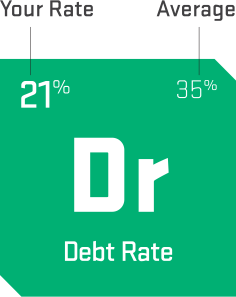
Dr Debt Rate

Indicates whether a person is servicing too much or too little debt for their individual circumstances.

Listen to our podcast episode about Debt Rate

Explore Debt Rate related articles

How We Determine Your Score

ANNUAL DEBT
PAYMENTS

TOTAL PERSONAL
INCOME

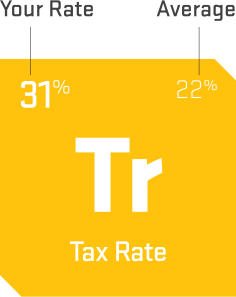
Tr Tax Rate

Indicates whether tax liability could be reduced with better tax planning.

Listen to our podcast episode about Tax Rate

Explore Tax Rate related articles

How We Determine Your Score

ANNUAL TOTAL TAXES

TOTAL PERSONAL
INCOME

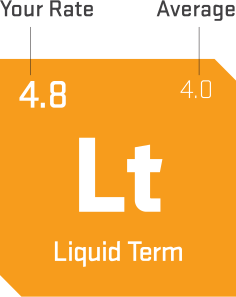
Lt Liquid Term

Estimates the number of years a person could live on his/her cash or cash-like assets outside of a retirement plan. Lt also indicates the amount of after-tax money an individual can access if needed.

Listen to our podcast episode about Liquid Term

Explore Liquid Term related articles

How We Determine Your Score

TOTAL LIQUID ASSETS

ANNUAL PERSONAL
SPENDING

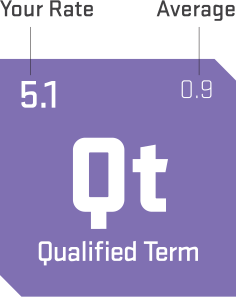
Qt Qualified Term

Estimates the number of years a dentist could live on the assets he/she has within qualified retirement plans (401k, IRA, etc.).

Listen to our podcast episode about Qualified Term

Explore Qualified Term related articles

How We Determine Your Score

RETIREMENT ACCOUNTS

ANNUAL PERSONAL
SPENDING

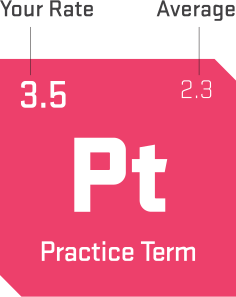
Pt Practice Term

Estimates the number of years a person could live on his/her current practice equity. It also indicates how much of a person’s wealth is concentrated in the practice.

Listen to our podcast episode about Practice Term

Explore Practice Term related articles

How We Determine Your Score

TOTAL PRACTICE EQUITY

ANNUAL PERSONAL
SPENDING

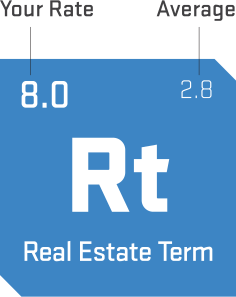
Rt Real Estate Term

Estimates the number of years a person could live on his/her current real estate equity. It also indicates how much of a person’s wealth is concentrated in real estate.

Listen to our podcast episode about Real Estate Term

Explore Real Estate Term related articles

How We Determine Your Score

TOTAL REAL
ESTATE EQUITY

ANNUAL PERSONAL
SPENDING

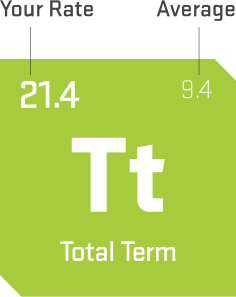
Tt Total Term

Estimates the number of years a person could live on his or her current assets if they did not grow. This includes cash, investments, practice value, and real estate equity.

Listen to our podcast episode about Total Term

Explore Total Term related articles

How We Determine Your Score

NET WORTH

ANNUAL PERSONAL
SPENDING

How much wealth do I need to make work optional?

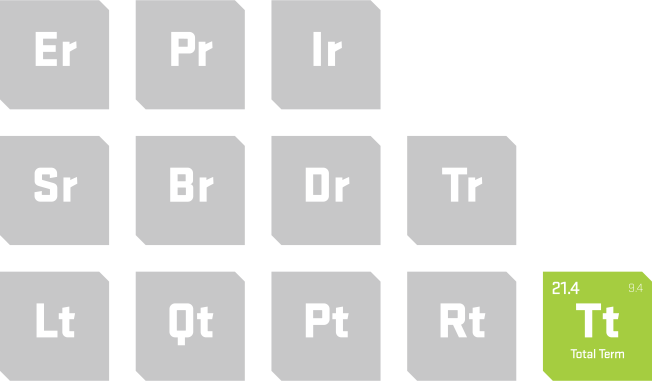
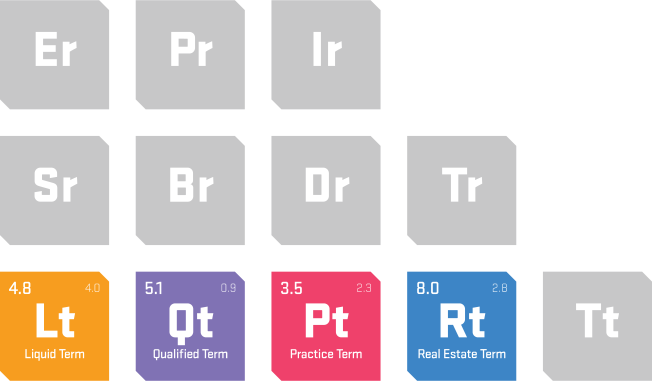
Tt (Total Term) is the crown jewel of the Elements® table because it indicates how long you could live on your current wealth if it did not grow. In other words, it provides a conservative estimate of how many years you could survive if you stopped working today. Tt is calculated by dividing net worth by annual personal spending. It is also a summation of the four blocks to its left which represent each asset type: Rt (Real Estate Term), Pt (Practice Term), Qt (Qualified Term), Lt (Liquid Term).

Download free eGuide

There's Only One Number You Need to Predict Your Retirement

Download eGuide

Do I have the right mix of assets?

The four blocks to the left of Tt (Total Term) estimate how long you could live on your liquid assets, qualified retirement plans, practice equity, and real estate equity respectively. These represent the four asset types in a dentist’s portfolio, and when added together, they create your Tt. These four blocks also provide a clear view of your asset distribution to help you and your advisor understand if there’s an opportunity for better diversification.

Podcast #82
The Numbers Dentists Need to Know to Retire Better

Listen to Podcast

Am I using my income wisely?

The second row of the Elements® table calculates the percentage of your total income that goes toward savings (Savings Rate), spending (Burn Rate), Debt (Debt Rate), and Taxes (Tax Rate). These are the only four places your income can go and it’s important to keep them optimized to accelerate growth.

Podcast #95
This is Why Dentists Spend Too Much Money

Listen to Podcast

Am I taking the right amount of risk?

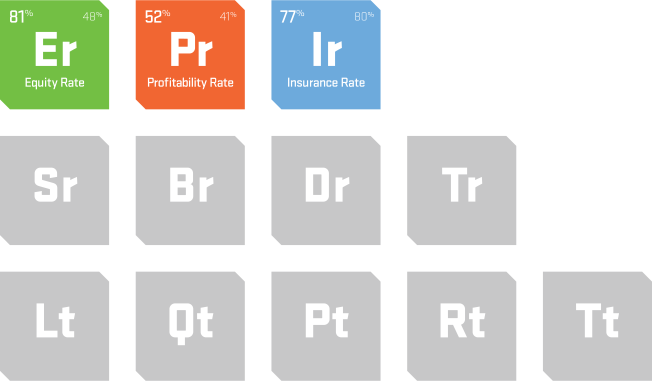
The top row of Elements® contains Er (Equity Rate), Pr (Profitability Rate), and Ir (Insurance Rate). These ratios indicate risk levels within your investment portfolio, business, and insurance profile respectively. The amount of risk you should take in each area will depend on a number of factors including your tolerance for risk, career phase, liquidity, and financial goals.

Podcast
How Much Insurance Does a Dentist Need? – Episode #100

LISTEN TO PODCAST

Sample Elements® performance summaries

(Click images to view full PDFs)

January

February

March

April

May

June

July

August

September

October

November

December