





Originally developed at Dentist Advisors, the Elements Financial Monitoring App allows you to:
- See all your financial accounts in one place
- Measure your financial health through a scorecard of key indicators
- Track your progress through quarterly reports
Because the Elements app is a two-sided platform, our advisors (with your permission) can also access your scorecard and offer personalized insights during your 1:1 coaching sessions.


Use Elements® to Easily Monitor Your Financial Health
The Elements scorecard provides a set of standard vital signs for assessing your holistic financial health at a glance.
Elements® App Setup
The following instructional video will assist you in setting up your Elements® app.
Er Equity Rate
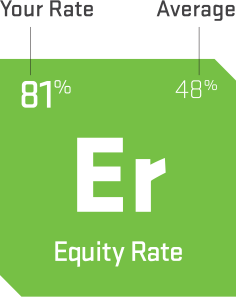
Helps us determine whether the client will experience too much volatility risk for their personal level of spending and age.
How We Determine Your Score
EQUITY INVESTMENTS
TOTAL INVESTMENTS
Pr Profitability Rate

Measures how much money the practice owner keeps as a percentage of collections. This serves as an important indicator of business efficiency.
How We Determine Your Score
TOTAL PRACTICE-
RELATED INCOME
RELATED INCOME
TOTAL COLLECTIONS
Ir Insurance Rate
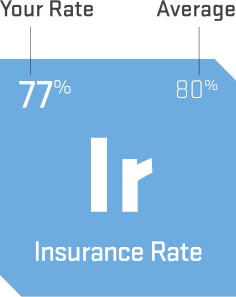
Measures how much insurance a person has compared to how much they need based on annual spending and net worth. Coverage is evaluated for the following types of insurance: life, general disability, business overhead disability, buy-sell, key person, personal liability, and business liability.
How We Determine Your Score
INSURANCE
COVERAGE HELD
COVERAGE HELD
INSURANCE
COVERAGE REQUIRED
COVERAGE REQUIRED
Sr Savings Rate
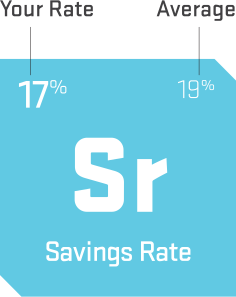
Indicates how much of a person’s income is being put away for future expenses, emergencies, and retirement.
How We Determine Your Score
ANNUAL SAVINGS
TOTAL
PERSONAL INCOME
PERSONAL INCOME
Br Burn Rate
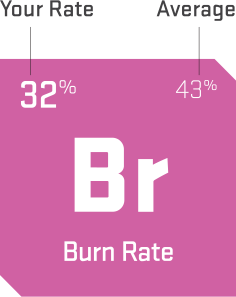
Helps us understand a client’s spending patterns and retirement preparedness.
How We Determine Your Score
ANNUAL PERSONAL
SPENDING
SPENDING
TOTAL PERSONAL
INCOME
INCOME
Dr Debt Rate
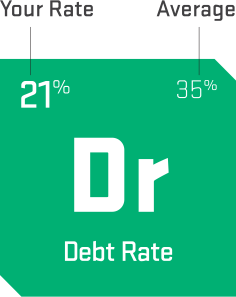
Indicates whether a person is servicing too much or too little debt for their individual circumstances.
How We Determine Your Score
ANNUAL DEBT
PAYMENTS
PAYMENTS
TOTAL PERSONAL
INCOME
INCOME
Tr Tax Rate
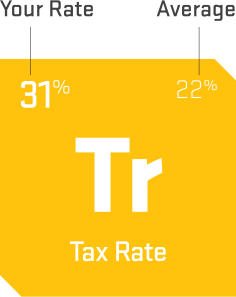
Indicates whether tax liability could be reduced with better tax planning.
How We Determine Your Score
ANNUAL TOTAL TAXES
TOTAL PERSONAL
INCOME
INCOME
Lt Liquid Term
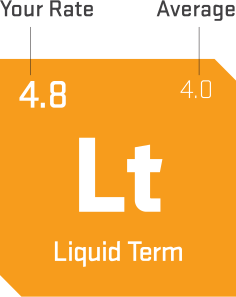
Estimates the number of years a person could live on his/her cash or cash-like assets outside of a retirement plan. Lt also indicates the amount of after-tax money an individual can access if needed.
How We Determine Your Score
TOTAL LIQUID ASSETS
ANNUAL PERSONAL
SPENDING
SPENDING
Qt Qualified Term
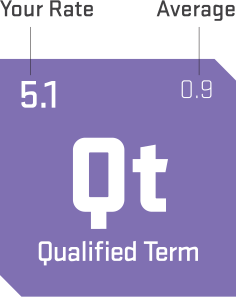
Estimates the number of years a dentist could live on the assets he/she has within qualified retirement plans (401k, IRA, etc.).
How We Determine Your Score
RETIREMENT ACCOUNTS
ANNUAL PERSONAL
SPENDING
SPENDING
Pt Practice Term
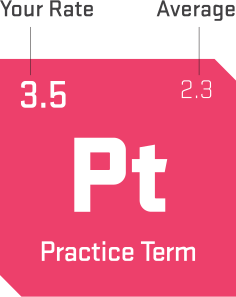
Estimates the number of years a person could live on his/her current practice equity. It also indicates how much of a person’s wealth is concentrated in the practice.
How We Determine Your Score
TOTAL PRACTICE EQUITY
ANNUAL PERSONAL
SPENDING
SPENDING
Rt Real Estate Term
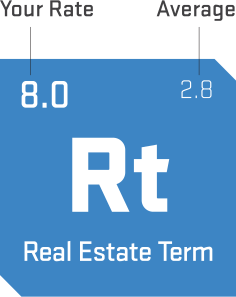
Estimates the number of years a person could live on his/her current real estate equity. It also indicates how much of a person’s wealth is concentrated in real estate.
How We Determine Your Score
TOTAL REAL
ESTATE EQUITY
ESTATE EQUITY
ANNUAL PERSONAL
SPENDING
SPENDING
Tt Total Term
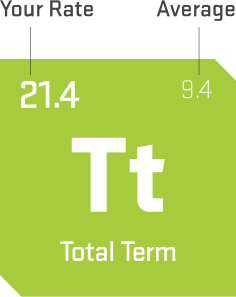
Estimates the number of years a person could live on his or her current assets if they did not grow. This includes cash, investments, practice value, and real estate equity.
How We Determine Your Score
NET WORTH
ANNUAL PERSONAL
SPENDING
SPENDING
How much wealth do I need to make work optional?
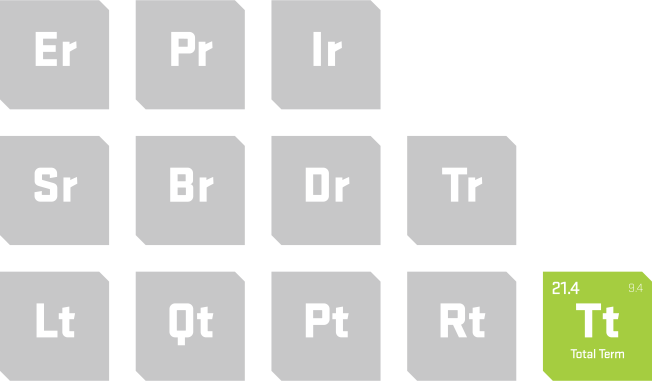

Tt (Total Term) is the crown jewel of the Elements® table because it indicates how long you could live on your current wealth if it did not grow. In other words, it provides a conservative estimate of how many years you could survive if you stopped working today. Tt is calculated by dividing net worth by annual personal spending. It is also a summation of the four blocks to its left which represent each asset type: Rt (Real Estate Term), Pt (Practice Term), Qt (Qualified Term), Lt (Liquid Term).
Do I have the right mix of assets?
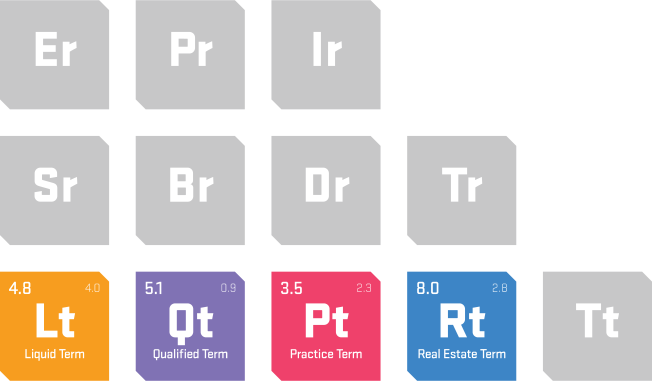

The four blocks to the left of Tt (Total Term) estimate how long you could live on your liquid assets, qualified retirement plans, practice equity, and real estate equity respectively. These represent the four asset types in a dentist’s portfolio, and when added together, they create your Tt. These four blocks also provide a clear view of your asset distribution to help you and your advisor understand if there’s an opportunity for better diversification.
Podcast #82
The Numbers Dentists Need to Know to Retire Better
Am I using my income wisely?

The second row of the Elements® table calculates the percentage of your total income that goes toward savings (Savings Rate), spending (Burn Rate), Debt (Debt Rate), and Taxes (Tax Rate). These are the only four places your income can go and it’s important to keep them optimized to accelerate growth.
Podcast #95
This is Why Dentists Spend Too Much Money
Am I taking the right amount of risk?
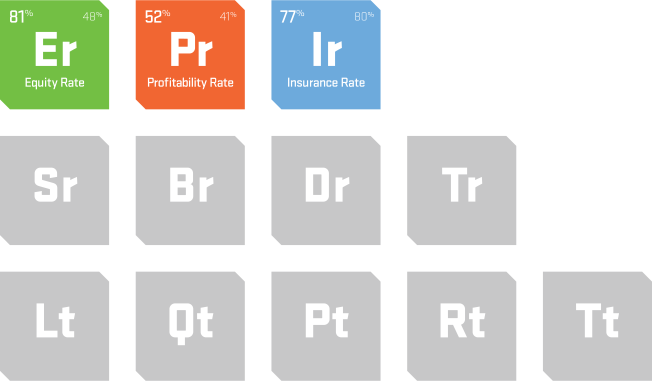

The top row of Elements® contains Er (Equity Rate), Pr (Profitability Rate), and Ir (Insurance Rate). These ratios indicate risk levels within your investment portfolio, business, and insurance profile respectively. The amount of risk you should take in each area will depend on a number of factors including your tolerance for risk, career phase, liquidity, and financial goals.
Podcast
How Much Insurance Does a Dentist Need? – Episode #100
Sample Elements® performance summaries
(Click images to view full PDFs)
January

February

March

April

May

June

July

August

September

October

November

December
