





Kick Off Call
(Step 1)
Meet with your advisor to talk through your questions, create your statement of financial purpose, and uncover your core values. Together, you’ll clarify your short-term and long-term goals and set the foundation for your financial plan.

Organization
(step 2)
Your advisor helps gather the documents you need, including investment statements, tax returns, P&Ls, loan details, and insurance policies. We set up your dashboard and create your net worth and cash flow statements so everything is organized and easy to understand.

Financial Health Assessment
(step 3)
Using your personalized Financial Hygiene Chart, your advisor reviews your cash flow, savings, investment allocation, risk level, and retirement progress. You’ll see which parts of your plan are on track and which ones need more focused attention to strengthen your overall financial picture.

Financial Treatment Plan
(step 4)
Your advisor documents your statement of financial purpose, refines your goals, and outlines a clear set of priorities. You’ll know exactly what steps to take next and how each one moves you closer to your long-term goals.

Ongoing Guidance
(Step 5)
Along with unlimited access to our team, your dedicated CFP® advisor will schedule at least 3 meetings with you per year. Your investments will also be monitored by our in-house CFA on a daily basis, and you’ll receive quarterly net worth progress reports along the way.
Financial Hygiene Chart
Understand Your Numbers. Strengthen Your Plan.
Just like clinical exams reveal what’s happening beneath the surface, the Financial Hygiene Chart evaluates 12 important financial indicators. See where your financial health is strong and where more attention may be needed to keep you on track and make work optional on your terms.
FINANCIAL HYGIENE CHART
Profitability
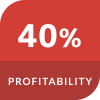
Measures how much money the practice owner keeps as a percentage of collections. This serves as an important indicator of business efficiency.
How We Determine Your Score
Total Practice-Related Income
Total Collections
Insurance

Assesses whether you’re properly insured against the biggest risks dentists face: loss of income, disability, liability, and business interruption.
How We Determine Your Score
Insurance Coverage Held
Insurance Coverage Required
Estate

Helps us assess whether your family and assets are protected if you pass away or become unable to make decisions.
How We Determine Your Score
Estate Plan Documents Completed
Estate Documents Needed
Retirement Readiness
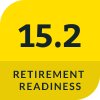
Estimates the number of years a person could live on his or her current assets if they did not grow. This includes cash, investments, practice value, and real estate equity.
How We Determine Your Score
Net Worth
Annual Personal Spending
Liquidity
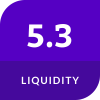
Estimates the number of years a person could live on his/her cash or cash-like assets outside of a retirement plan. It also indicates the amount of after-tax money an individual can access if needed.
How We Determine Your Score
Total Liquid Assets
Annual Personal Spending
Business Equity
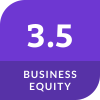
Estimates the number of years a person could live on his/her current business equity. It also indicates how much of a person’s wealth is concentrated in the practice and/or other businesses.
How We Determine Your Score
Total Practice and/or Other Businesses
Annual Personal Spending
Retirement Accounts
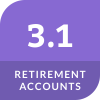
Estimates the number of years a person could live on his/her current tax-advantaged retirement accounts. Tax-advantaged retirement accounts are not easily accessible before a certain age without incurring penalties.
How We Determine Your Score
Total Retirement Accounts
Annual Personal Spending
Real Estate
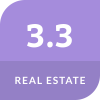
Estimates the number of years a person could live on his/her current real estate equity. It also indicates how much of a person’s wealth is concentrated in real estate.
How We Determine Your Score
Total Real Estate Equity
Annual Personal Spending
Savings

Indicates how much of a person’s income is being put away for future expenses, emergencies, and retirement.
How We Determine Your Score
Annual Savings
Total Personal Income
Taxes
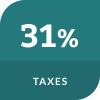
Indicates how much annual income is paid in taxes.
How We Determine Your Score
Annual Total Taxes
Total Personal Income
Debt
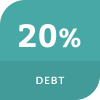
Indicates how much annual income is being paid towards required debt payments.
How We Determine Your Score
Annual Debt Payments
Total Personal Income
Spending
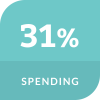
Indicates how much annual income is paid towards yearly personal expenses.
How We Determine Your Score
Annual Personal Spending
Total Personal Income